
What Drives the Cost of a Full-Service Renovation in Sydney
One of the first questions in any renovation conversation is also the hardest to answer simply - what will this actually cost? It's a fair question, and a genuinely difficult one to answer with a single number. In a full-service renovation, the final budget is shaped by far more than square-metre rates or room-by-room averages. Two projects that look similar on the surface can land tens of thousands of dollars apart, depending on decisions most people never think to ask about upfront.
For Sydney homeowners planning a large-scale renovation, the real cost is usually driven by choices around joinery, materials, structural change, documentation and scope. So rather than give you a vague range and leave it there, here is what we've actually seen move a budget up or down, and why the number you've read elsewhere probably won't match your project.
Why Renovation Cost Guides Rarely Reflect a Real Sydney Project
Cost guides tend to quote a single figure per square metre or per room. That's a reasonable starting point, but a poor predictor of what you'll actually spend. A kitchen renovation with standard joinery and a kitchen renovation with a fully custom, floor-to-ceiling cabinetry solution are both called "a kitchen renovation," yet they can differ by tens of thousands of dollars.
As a general guide, a full-service interior design fee for a substantial renovation typically represents somewhere between 10 and 20 per cent of total project spend. That proportion tends to rise as the project grows more complex: more trades to coordinate, more custom joinery, more rounds of documentation. It's a useful way to think about the design fee in context. But the real variable is what sits inside that total project spend in the first place.
The Biggest Budget Drivers: Joinery, Materials, Structure and Scope
A handful of decisions tend to move a Sydney renovation budget more than anything else:
- Joinery complexity: standard cabinetry versus fully custom, floor-to-ceiling built solutions
- Material selections: engineered stone versus natural stone, standard tiles versus imported or bespoke finishes
- Structural change: reconfiguring a floor plan versus working within the existing footprint
- Scope creep: decisions made mid-project that weren't part of the original brief
- Trade availability and site conditions: these affect labour cost regardless of design choices
None of these is inherently right or wrong. They are simply the decisions that most directly influence a renovation budget, and understanding them before you start is what turns uncertainty into a clear, workable plan.
What an Interior Design Fee Covers in a Renovation Budget
A well-structured design fee typically covers the brief and discovery process, concept development, spatial planning, material and finish selections, and the documentation a builder actually works from.
It does not usually cover the cost of the materials, furniture or construction itself. Those sit in the broader project budget the design fee is helping you plan for. You can see the full scope of what we cover across a project on our practice page.
What a Renovation Budget Typically Includes
For a clearer picture, a full-service renovation budget usually breaks down into these areas:
- Design and documentation: the brief, concept, spatial planning and builder-ready drawings
- Custom joinery: cabinetry, built-in storage and bespoke feature elements
- Materials and finishes: stone, tiles, flooring, fixtures and fittings
- Structural work: reconfiguring floor plans, removing or moving walls, and any engineering involved
- Trade labour: the cost of the skilled trades needed to deliver the work
- Contingencies: a sensible allowance for site conditions and the unexpected
Seeing your budget in these terms makes it far easier to understand where your money is going, and where a single decision can shift the total.
What Actually Shapes a Budget on a Real Project
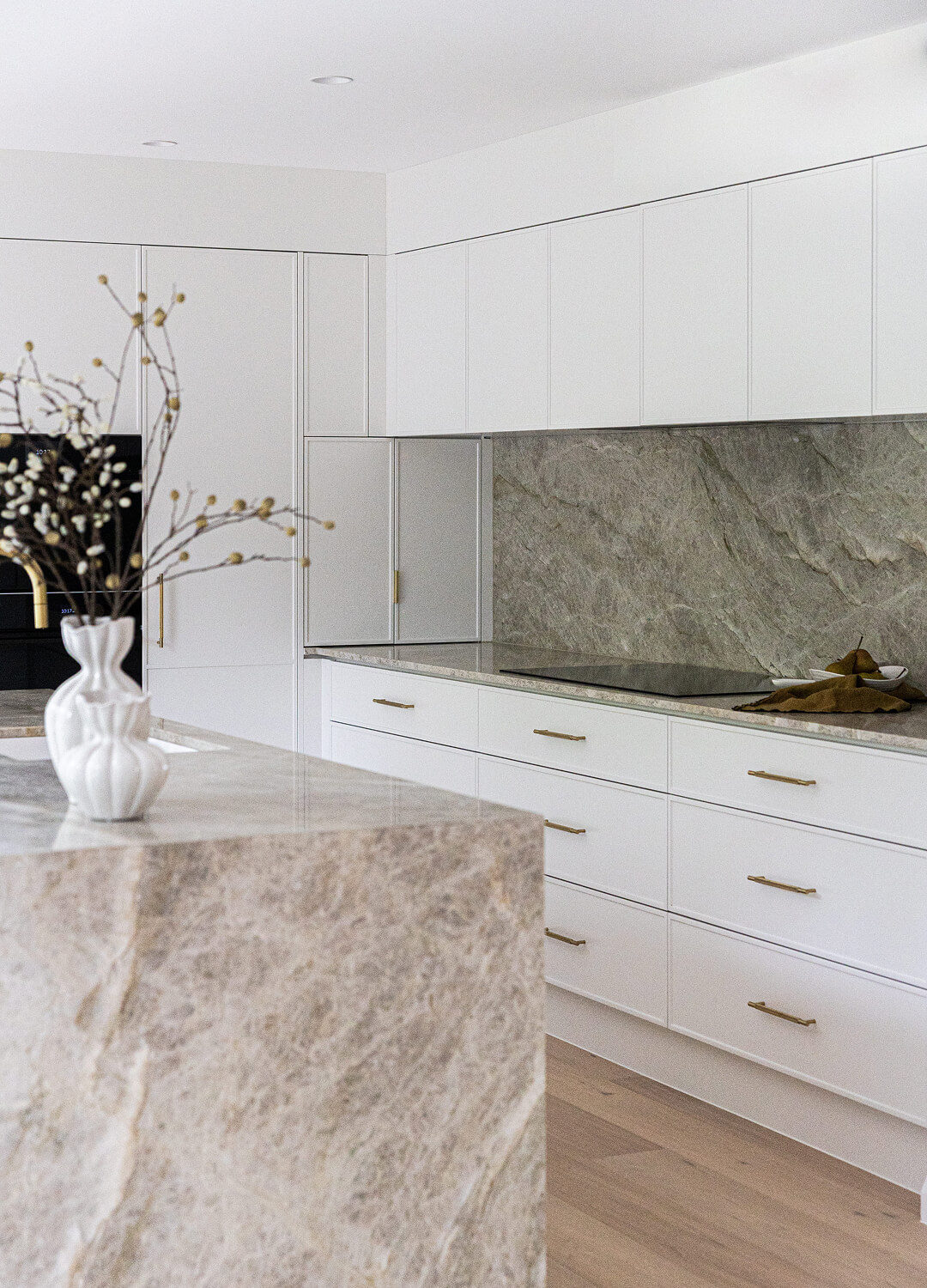
On a large-scale renovation like our Corner House project, the biggest cost drivers weren't the obvious ones. Custom joinery through the kitchen and living areas, a considered material palette carried consistently through the home rather than value-engineered room by room, and structural changes to open up the original floor plan all had a far bigger impact on the final number than the finishes most people assume are expensive, like paint colours or light fittings.
We've seen the same pattern on other large-scale renovations, including Theresa Park. The decisions that seem minor early in the brief, a slightly larger island or one more run of custom joinery, are often the ones that move a budget the most. Meanwhile, selections that feel high-stakes early on, such as choosing a paint colour, rarely are.
Questions to Ask Before Accepting a Renovation Cost Estimate
Whoever you're speaking with, a few questions will tell you a great deal about how realistic a quoted figure actually is:
- Does this figure include construction, or only the design fee?
- What's driving the top and bottom of the range you've given me?
- Where have similar Sydney renovations typically landed once joinery and material selections were finalised?
The answers won't give you an exact number this early; nothing reasonably can, but they'll tell you whether the person you're speaking with genuinely understands where your money will go, or is simply quoting a market average back to you.
Next issue: how long does a full renovation actually take, and why the timeline you've heard is probably only part of the answer.