
What an Interior Designer Is Actually Responsible For
Most people think our job is choosingcolours and cushions. Here is what actually fills our week.
Most people think our job is choosingcolours and cushions. It's an understandable assumption; the finished photographs are the only part of a project most people ever see, andthey tend to look the most like a decision about taste. In reality,that's a small part of what fills our week. The bulk of it is far less photogenic, and far more consequential.
The hundreds of decisions nobody sees
A typical project involves space planning, joinery design, material and finish selections, lighting layouts, construction documentation and coordinating suppliers, which sounds like a tidy list until you realise each of those items isreally dozens of individual decisions, all of which need to work together and none of which can be made in isolation.
Move a window, and you change thelighting layout. Change the lighting layout, and you change where joinery can sit. Change the joinery, and you've changed the electrical plan a builder needs to price against. None of the sedecisions happens in a vacuum, which is a large part of why a considered brief and a considered process matter so much more than people expect going in.
What that looks like on an actual project
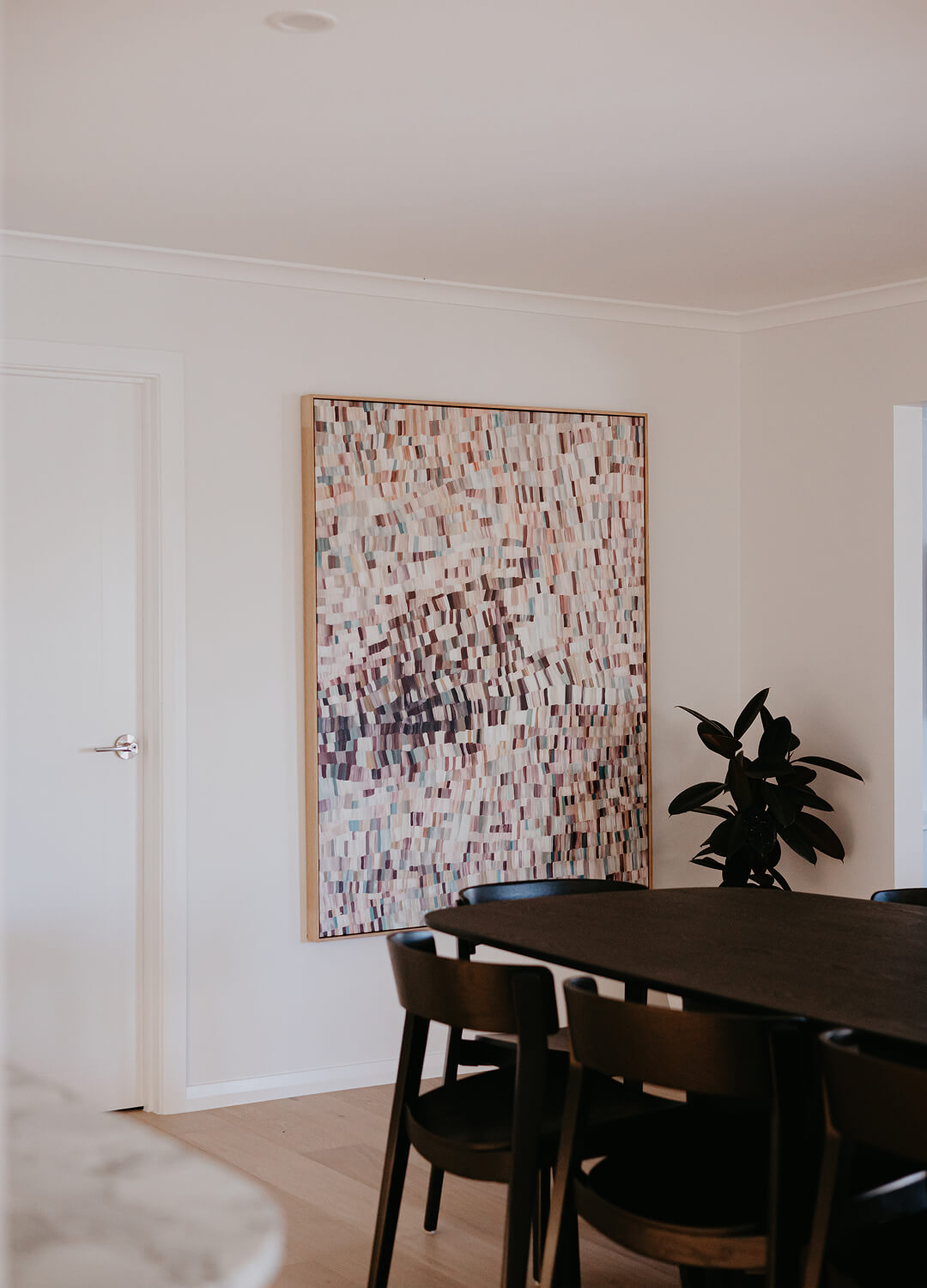
On a recent large-scale renovation, the kind of project you can see reflected in our Theresa Park work, the visible outcome is a beautifully finished home. What that outcome doesn't show is the space planning that determined how the kitchen, living and outdoor areas would actually connect, the joinery drawings developed and revised across multiple rounds with the builder, the lighting layout mapped room by room against how the family actually uses each space at different times of day, and the steady back and forth of construction documentation that turns a concept into something buildable.
That is the part of the job that rarely makes it into a portfolio image, and it's also the part that determines whether a finished home actually works as well as it photographs.
What we don't do
It's just as useful to be clear about where our responsibility ends. We don't do structural engineering, building approvals or construction itself. Those responsibilities sit with builders, architects, engineers, certifiers and other consultants, and a good designer should be up front about that boundary rather than blurring it.
Understanding who does what across a project team is worth knowing before you start, and it's part of whatwe walk through in a first meeting; you can see the scope of what wedo cover across our practice page.
Why the best projects are collaborative
The best projects happen when everyone on the team understands their role and where it hands off to the next person. A designer who tries to take on engineering decisions, or a builder who starts making design calls without looping the designer back in, is usually where confusion and cost blowouts start creeping into a project.
Understanding who is responsible for what, before the first wall comes down, can save agenuinely significant amount of confusion later. It's a simple thing to ask about up front, and it tells you a great deal about how a studio actually operates.
Start the conversation
If you're planning a project and want to understand what a designer's role would actually involve, get in touch with our team.