
Coastal Living, Considered: Designing for Bondi, Bronte and Clovelly
Say "coastal interior" and most people picture a look: white walls, rattan, driftwood, a stripe or two. That look has its place, but it misses the point. Designing a home a few streets from the surf is less about an aesthetic and more about understanding what the ocean does to a house over years, not months.
Bondi, Bronte and Clovelly sit within a few kilometres of each other on Sydney's eastern beaches, yet each asks something slightly different of a home. In our first Sydney by Design piece, we looked at how terraces shape interiors in the inner city. Here, the defining force is the coast itself.
Three beaches, three ways of living
Bondi is the most intense of the three. Homes range from apartments to freestanding houses, and many are lived in hard: beach gear, visitors, busy entries and constant foot traffic. Design here has to be robust first and beautiful second, without ever sacrificing the second. Read more about how we work in the suburb on our Bondi interior design page.
Bronte feels quieter and more family-focused, with homes that often need to flex between everyday routines, weekend gatherings, and movement between the house, garden, and beach. Here we think carefully about the transition zones, where outdoor life comes back inside. See our Bronte interior design page.
Clovelly is tucked around its narrow bay and has a more residential, low-key rhythm. Homes here often suit a softer, calmer palette and interiors that frame the light rather than compete with it. Our Clovelly interior design page provides more detail on the suburb.
The common thread is exposure. Whatever the suburb, a coastal home faces four forces every day.
What the coast actually does to a home
Salt. Salt-laden air settles on every surface, inside and out. On metals, it drives corrosion; on glass and fixtures, it leaves a film that needs regular washing.
Moisture. Coastal air carries more humidity, which affects timber, fabrics and anything that can absorb it, and it combines with salt to make metal surfaces more vulnerable.
Sand. It comes in on feet, towels, bags and the wind. It is abrasive underfoot and gets into every groove and joint.
Light. Beachside light is bright and reflective. It is one of the great pleasures of living near the water, but it fades fabrics and timber and can create glare in rooms without considered window treatments.
Good coastal design responds to each of these deliberately, rather than hoping the finishes will cope.
Metals: where the most expensive mistakes happen
If there is one area where coastal homes go wrong, it is metal. Tapware, handles, hinges, balustrades, outdoor showers and light fittings can all deteriorate quickly if the wrong material is specified.
Stainless steel is a good example, because it is often assumed to be maintenance-free. The Australian Stainless Steel Development Association recommends selecting grade 316, or a grade with equivalent corrosion resistance, as a minimum within five kilometres of the surf. It warns that lower grades such as 304 and 430 are likely to develop "tea staining", a brown discolouration, or more serious corrosion in marine environments. For exposed situations such as splash zones, it notes that higher grades may be needed.
Homes across Bondi, Bronte and Clovelly sit well inside that five-kilometre band, so we treat 316 as the starting point, not an upgrade. We also plan for maintenance from the outset. ASSDA offers a memorable rule of thumb: if the window next to your stainless steel needs washing, the stainless steel does too.
Other metals need the same thought. We used brass fittings at Corner House in Redfern, and brass is a beautiful choice by the beach as well. Closer to the surf, we talk clients through how quickly a living finish will develop its patina. Some clients love that change; others would rather choose a coated or more stable finish from the start. Neither is wrong, as long as the decision is made knowingly.
Surfaces and floors that forgive sand and wet feet
Floors in a coastal home take more punishment than almost anywhere else in Sydney. Sand is abrasive, and wet feet and towels are constant in summer.
Our general approach:
- Favour textured or honed finishes over high-gloss ones in entries, living areas and bathrooms. They show less wear, are more forgiving underfoot when wet and do not highlight every grain of sand.
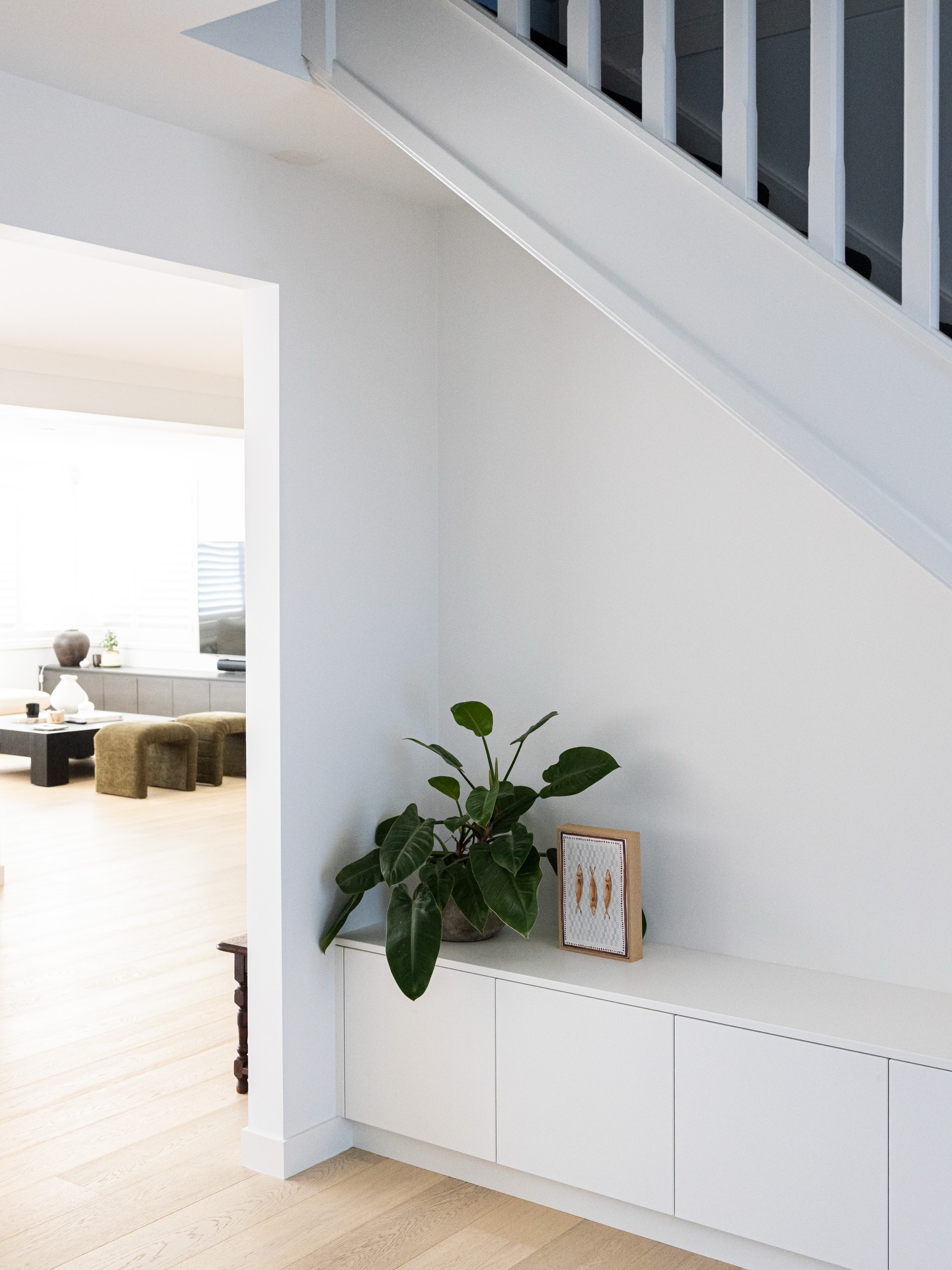
- Design a proper landing zone. A generous entry or mudroom-style area with an outdoor shower, hooks, bench seating and storage for beach gear stops the beach travelling through the whole house.
- Seal natural stone and plan its maintenance. Stone is one of the most beautiful materials for a coastal home, but it needs to be properly sealed for its intended use and resealed over time.
- Choose timber with care. Timber brings essential warmth to a coastal palette, but it moves with humidity. Species, finish and detailing all need to suit the conditions.
Light, glare and the materials that fade
The light on Sydney's eastern beaches is one of the reasons people choose to live there. The design task is to enjoy it without feeling overwhelmed.
We layer window treatments so rooms can move from full brightness to softened daylight, and we consider orientation when placing furniture, artwork, and anything prone to fading. Upholstery in sunny rooms is specified with lightfastness in mind, and in spaces that open to the outdoors, we often use performance fabrics that can handle salt, sand, and damp swimwear without looking utilitarian.
A palette drawn from the place, not the cliché
The most successful coastal interiors we see take their cues from the real landscape rather than a beach-house catalogue. Think of the warm tones of the sandstone headlands, the texture of the dunes and the changing colours of the water through the day. A palette like that feels grounded and timeless, and it still looks right in winter, when the beach is quieter, and the light is lower.
That usually means warm neutrals, natural textures and a restrained number of materials, used well. It is the same principle we apply everywhere: a few beautiful, durable materials will always outlast a room full of on-trend details.
A coastal design checklist
If you are planning a renovation near the beach, these are the questions we would work through with you:
- Are all exposed metals, inside and out, specified for a marine environment?
- Is there a dedicated place for sand, salt water and beach gear to stop before the living areas?
- Are floor and benchtop finishes forgiving of sand, water and wear?
- Have natural stone and timber been selected, sealed and detailed for coastal humidity?
- Can every room control its light, from full sun to soft daylight?
- Are fabrics in sunny and indoor-outdoor spaces made to handle fading and moisture?
- Is there a realistic maintenance plan so the home still looks cared for in ten years?
If you are still deciding what kind of professional your project needs, our guide, Designer, Decorator or Stylist: Which One Does Your Project Actually Need? is a good place to start.
Frequently Asked Questions
What grade of stainless steel should I use in a coastal home?
The Australian Stainless Steel Development Association recommends grade 316, or a grade with equivalent corrosion resistance, as a minimum within five kilometres of the surf. Lower grades such as 304 and 430 are likely to tea-stain or corrode in marine environments, and exposed splash zones may require higher grades.
What is tea staining?
Tea staining is a brown discolouration that appears on stainless steel when it is exposed to an environment more aggressive than its grade can withstand, which is common near the coast. Choosing the right grade, a smooth finish and regular washing all help prevent it.
What flooring works best near the beach?
Durable, forgiving finishes work best: textured or honed surfaces rather than high-gloss ones, with natural stone sealed appropriately and timber chosen and finished to suit coastal humidity. A dedicated entry zone for sand and wet gear protects every floor beyond it.
How do I keep a coastal home from looking cliché?
Take the palette from the real landscape rather than beach-house styling. Warm neutrals, natural textures, and a small number of quality materials feel grounded year-round and date far more slowly than themed decor.
Does Wilbur Jones design homes in Bondi, Bronte and Clovelly?
Yes. We work across Sydney's eastern suburbs, including Bondi, Bronte and Clovelly.
Ready to design a coastal home that lasts?
Whether you are renovating a beachside apartment or reworking a family home a few streets back from the sand, we would love to hear about it. We manage every project from initial concept through to completion.
- Email: hello@wilburjones.com.au
- Connect with Emma on LinkedIn
- Follow the studio on Instagram
Next in the Journal: What Project Management by an Interior Designer Actually Looks Like.